



What to Do If You Are Injured in a Car Accident in Florida

A car accident can happen in mere seconds. After the initial shock wears off and the trip to the emergency room, you may not know what to do next. That’s where we come in. We’ve created a helpful guide of the steps to take if you’ve been involved in an automobile accident. Following these suggestions can determine how successful your car accident claim can be and how much compensation you can recover.
If you were recently in a crash and are wondering what to do next, this step-by-step guide from our dedicated Florida car accident attorneys covers every move in the order it matters. Florida's no-fault insurance system, its comparative fault rules, and the PIP treatment deadline all create obligations and deadlines that many drivers do not know exist until something goes wrong. This guide walks through every step in the order it matters.
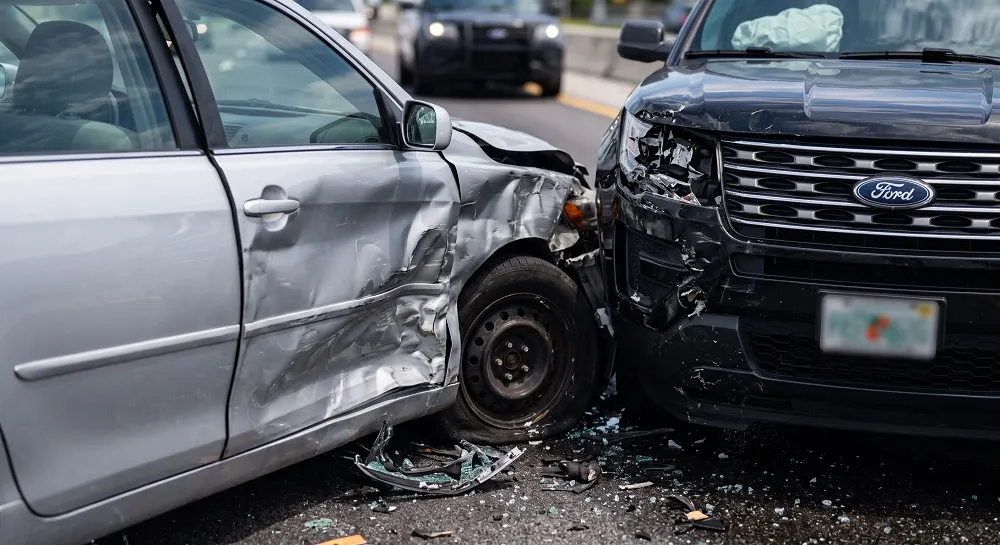
At the Scene: The First Few Minutes
The actions you take in the minutes immediately following a crash create the foundation for everything that follows: your safety, the official record, and the evidence your claim will depend on.
Step 1: Stop, Move to Safety, and Check for Injuries
Florida law requires every driver involved in a crash to stop immediately, remain at the scene, and give their name, address, and insurance information to anyone involved (Florida Statute §316.062). Leaving before doing so is a criminal offense. If the crash involved only property damage, it's a second-degree misdemeanor under Florida Statute §316.061.
If it involves injury or death, it's a felony under Florida Statute §316.027, with penalties scaling from a third-degree felony up to a first-degree felony depending on the severity of the injury or whether someone died.
Step 2: Call 911
Call 911 even if the accident seems minor.
Under Florida Statute §316.065, crashes involving injury, death, or property damage exceeding $500 must be reported to law enforcement. A police report creates an official record of what happened: who was involved, road conditions, the responding officer's initial observations, and any statements made at the scene. When the other driver changes their story later, that report is the foundation for establishing what actually occurred.
If law enforcement does not respond (which can happen with lower-impact collisions), you can file directly through the FLHSMV crash report portal.
Step 3: Document the Scene Before Anything Is Moved
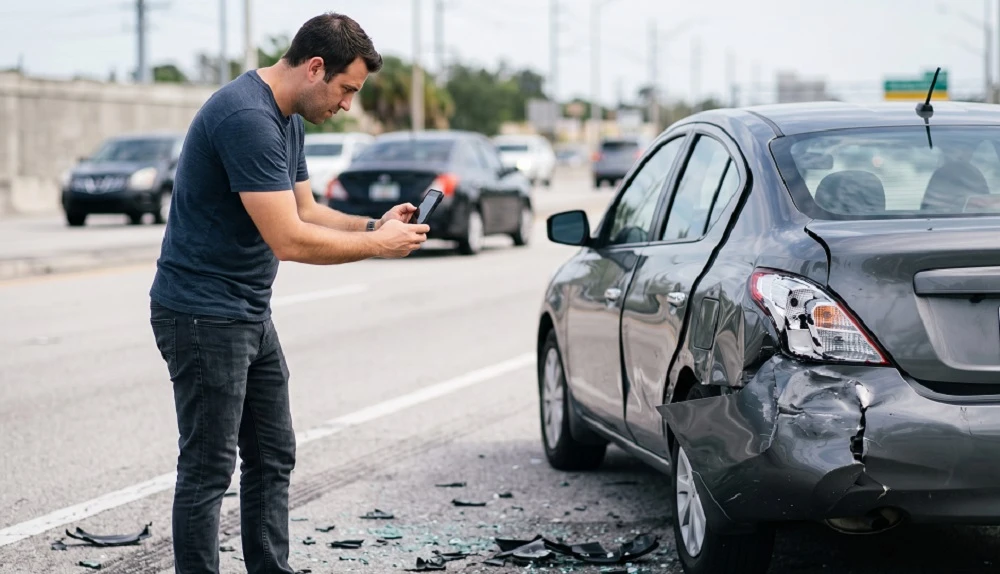
Your phone is one of the most important tools you have in the first few minutes. Use it before vehicles are moved, debris is cleared, or conditions change.
Photograph and video:
- All vehicles from multiple angles, showing position and damage;
- Skid marks, road debris, and surface conditions;
- Traffic signals, lane markings, and nearby signage;
- Your visible injuries;
- The other driver's license, license plate, and insurance card.
Record a voice memo about the sequence of events while your memory is fresh: the direction of travel, speed, signal status, what you observed just before impact. Details that seem minor at the scene frequently become significant weeks later in claims negotiations.
Step 4: Exchange Information Without Discussing Fault
Collect from every driver involved: full name, address, phone number, driver's license number, license plate number, and insurance information including carrier and policy number. If there were passengers, note how many.
Get witness names and contact information before they leave. Independent bystander accounts carry significant weight when the two drivers have different versions of what happened.
Then stop talking about the accident itself. Do not apologize, speculate about what caused the crash, or say anything that could be interpreted as accepting responsibility. Statements like "I didn't see you" or "the light was confusing" can be used against you later. Keep the conversation factual and brief.
#cta_start
The First Two Weeks After a Crash Can Decide Your Claim
Evidence disappears, deadlines run, and insurers move fast. Demand The Limits starts working on your case the day you call. Free consultation, available 24/7.
#cta_end
In the Hours After: What Cannot Wait
Once you have left the scene, two obligations run on strict timelines. Miss either one and it can significantly affect your claim.
Step 5: Get Medical Attention Within the 14-Day Rule
This is the most consequential step most accident victims do not know about, and the most commonly missed.
Under Florida Statute §627.736, you must seek initial medical treatment within 14 calendar days of the accident to access your Personal Injury Protection (PIP) benefits. Miss that window and your insurer can deny the claim entirely, regardless of who caused the crash.
Florida requires every driver to carry at least $10,000 in PIP coverage. PIP pays 80% of reasonable medical expenses and 60% of lost wages up to that limit. But it only activates if you get evaluated within 14 days.
Beyond the legal deadline, herniated discs, concussions, soft tissue damage, and internal bleeding often produce minimal symptoms in the first 24 to 48 hours. Adrenaline is a powerful mask. What feels like soreness at the scene can become a chronic condition within days. An early evaluation protects your health and creates the medical record that connects the accident to your injuries.
Step 6: Notify Your Own Insurance Company
Most Florida auto policies require prompt notification of any accident as a condition of coverage. Call your insurer, report the accident, and stick to the basic facts: date, time, location, vehicles involved.
Do not give a detailed recorded statement to your own insurer before speaking with one of our experienced attorneys.
The obligation is to notify, not to provide a full account that can later be used to limit your claim.

In the Days After: Protecting Your Claim
The scene is cleared, and the initial adrenaline has passed. What you do in the days that follow determines how strong your claim actually is when the insurance process begins.
Step 7: Keep a Detailed Record of Everything
From the day of the accident forward, document everything related to the injury:
- Every medical appointment, provider, treatment, and prescription;
- Days missed from work and income lost;
- Out-of-pocket expenses: transportation to appointments, home assistance, medical supplies;
- How the injury affects daily activities: what you can and cannot do.
This documentation becomes the foundation of your economic damages claim. The more specific and consistent the record, the harder it is for the insurance company to dispute.
Step 8: Manage Insurance Company Contact Carefully
The at-fault driver's insurer will contact you quickly. The adjuster will be professional and may seem sympathetic. Their goal is to close the claim as cheaply as possible.
You are not legally required to give a recorded statement to the other driver's insurer before retaining legal counsel. Recorded statements are not neutral documentation. They give adjusters opportunities to elicit answers that limit what the insurer owes. An adjuster can ask you questions, then take your innocent answers out of context to try to pay you less money, or even nothing at all. Do not give a statement before speaking with one of our skilled attorneys.
If you have already been contacted, tell them you will follow up and call an attorney first.
Step 9: Be Careful with Social Media
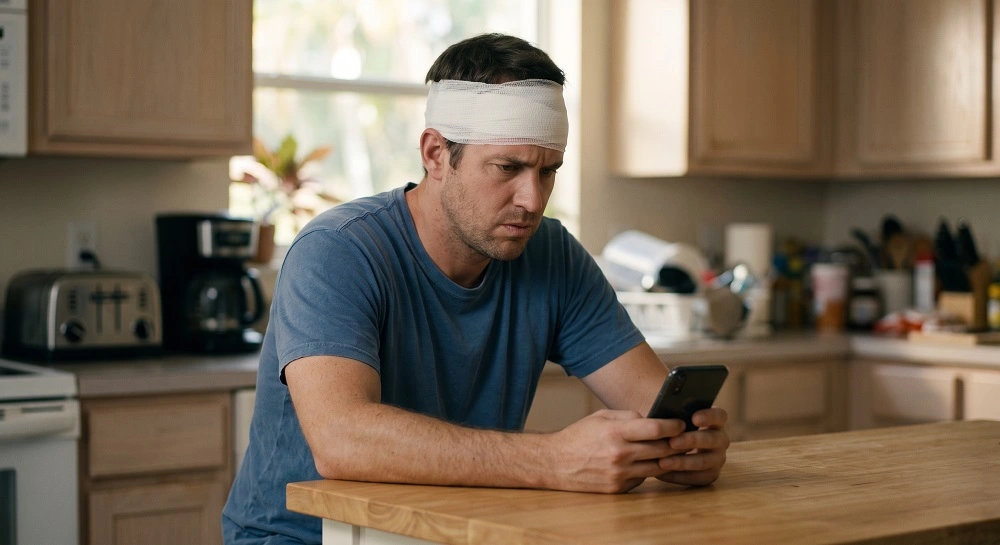
Insurance investigators routinely monitor claimants' social media. A photo or post that appears to contradict your injury claims, even an innocent one taken out of context, can be used to undermine your case.
Avoid posting about the accident, your injuries, or your activities while your claim is active. Adjust your privacy settings and avoid tagging your location.
Step 10: Do Not Accept an Early Settlement Offer Without Legal Review
If the at-fault driver's insurer makes a settlement offer quickly, the instinct to resolve things and move forward is understandable. Resist it. Early offers are almost always made before your full medical picture is clear and before future costs are established.
Once you sign a release, the claim is permanently closed. No attorney can reopen it. There is no recourse if you later discover a more serious condition or if treatment extends well beyond what the offer covered. Have one of our exceptional attorneys review any offer before accepting. The free consultation exists for exactly this reason.
Florida Laws That Directly Affect What You Can Recover
Three areas of Florida law shape what you can ultimately recover after a crash: how your own insurance responds first, how fault gets divided if the case goes further, and how long you have to act. Each one works in the background of every claim, whether or not an insurer ever mentions it.
PIP and the No-Fault System
Florida is a no-fault state. Your own PIP coverage pays the first layer of medical expenses and lost wages regardless of who caused the crash. PIP covers 80% of medical costs and 60% of lost wages up to $10,000, but only for qualifying treatment received within 14 days of the accident.
For injuries that meet Florida's serious injury threshold (significant permanent injury, permanent limitation of a body function, or significant scarring), you can pursue the at-fault driver directly for additional damages, including pain and suffering.
Modified Comparative Negligence

Under Florida Statute §768.81, your recovery is reduced by your percentage of fault. If you are more than 50% responsible, you cannot recover. Insurance companies routinely look for any contributing factor on your side to shift the percentage. Documentation from the scene limits what they can argue.
Statute of Limitations
Under Florida Statute §95.11, most personal injury lawsuits must be filed within two years of the date of the accident. Missing this deadline closes the door to recovery, no matter how strong your case is.
When to Call a Florida Car Accident Attorney
Call an attorney as early as possible after any accident involving:
- Injuries that required emergency treatment, hospitalization, or ongoing medical care;
- Significant property damage or a totaled vehicle;
- A commercial vehicle, rideshare driver, or government vehicle;
- A hit-and-run or an uninsured driver;
- Any dispute about who was at fault;
- An insurer that is delaying, denying, or making a lowball offer.
At Demand The Limits, we handle every car accident case on a contingency basis: no upfront costs and no fees unless we recover for you. We are available 24/7 in English and Spanish: Boca Raton and South Florida, Orlando and Central Florida. Contact us now!

Co-founder and equity partner of Demand The Limits, PLLC
Alan Siegel focuses his practice in the area of personal injury including vehicular accidents, wrongful death, and slip and falls. No stranger to litigation, Alan has been an integral part of an award winning team helping earn such accolades as the prestigious Hat Trick Award for three consecutive “not guilty” trial verdicts.
Know Your Steps. Know Your Rights.
Start with a free call. Our Florida car accident attorneys review your situation at no cost and make sure nothing falls through the cracks. Available 24/7 in English and Spanish.