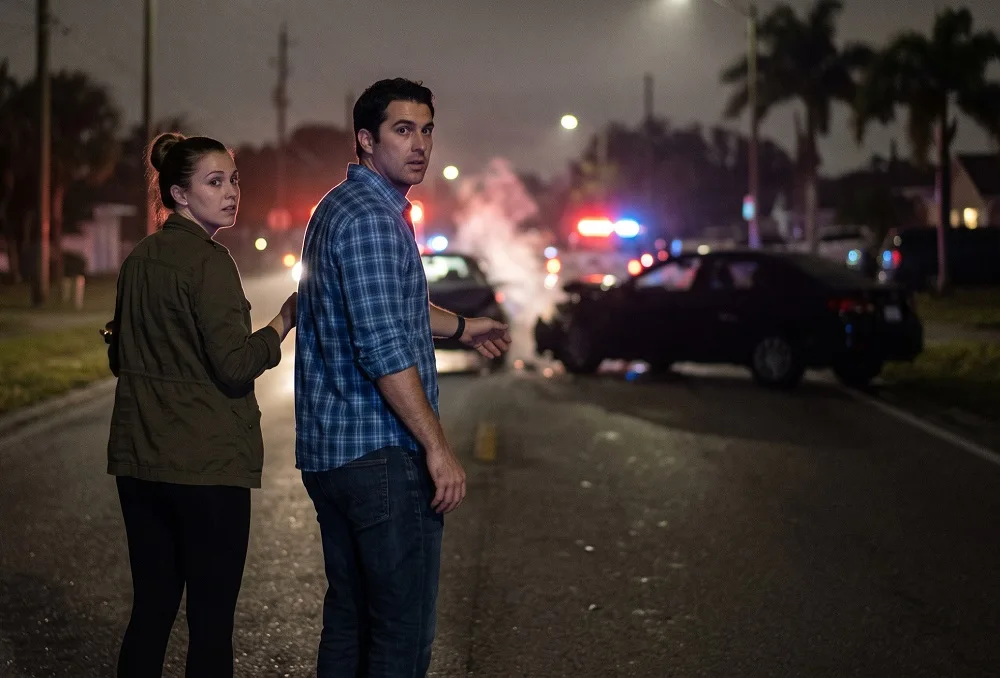



What to Do After a Car Accident That's Not Your Fault in Florida

Being hit by another driver may seem like it should be straightforward. You weren't at fault, the other driver caused the crash, and the insurance company should fairly compensate you for your losses. Unfortunately, that's not how many Florida car accident claims play out. From disputed liability and low settlement offers, injured victims often discover that proving someone else caused the crash is only the beginning of the claims process.
If you were recently in a collision caused by another driver, here is exactly what our experienced Florida car accident lawyer would tell you to do, and why each step matters more than most people realize.
When It's Not Your Fault, the Fight Is Just Beginning
Most people assume that if another driver caused the crash, the insurance process will take care of itself. In Florida, that assumption costs accident victims money every day.
Florida's no-fault insurance system, its modified comparative fault rules, and the tactics insurance adjusters use from the moment a claim opens all mean that being the innocent party is a starting point, not a guarantee. Florida recorded more than 381,000 crashes in 2024, resulting in over 3,100 fatalities and hundreds of thousands of injuries, according to the Florida Department of Highway Safety and Motor Vehicles (FLHSMV). A significant portion of those crashes involved completely blameless drivers, and many of them still had to fight for fair compensation.
The steps below walk through what to do after a car accident that's not your fault in Florida, in the order they matter.
Step 1: Stay at the Scene, Move to Safety, and Call 911

The immediate priority after any crash is your physical safety. If you can move your vehicle out of traffic without worsening your injuries or putting yourself or others in greater danger, do so and activate your hazard lights. Check yourself and passengers for injuries before anything else.
Then call 911. Under Florida Statute §316.065, you are required to report any accident involving injury, death, or property damage that appears to exceed $500. Even if the crash seems minor, a police report is one of the most vital documents in a car accident claim. It records who was involved, witness accounts, road conditions, and the responding officer's initial observations about how the collision happened. When the other driver changes their story later (and it happens often), that report becomes the foundation for proving fault.
If law enforcement does not respond (as can happen in lower-impact collisions), Florida Highway Safety and Motor Vehicles provides an online crash report portal where you can file a report directly.
Step 2: Document the Scene Thoroughly
Before anyone moves vehicles or clears debris, use your phone to build a visual record.
Photograph and video:
- All vehicle damage from multiple angles
- Skid marks, debris, and road conditions
- Traffic signals, lane markings, and nearby signage
- Your visible injuries
- The other driver's license plate, insurance card, and driver's license
Write down or record a voice memo about what happened while your memory is fresh, including the sequence of events, any statements the other driver made, time of day, lighting, and weather conditions. Small details that seem irrelevant at the scene often become important during claims negotiations weeks later.
If there are witnesses, get their names and contact information before they leave. Independent accounts from people with no stake in the outcome carry real weight when fault is disputed.
Step 3: Exchange Information Without Discussing Fault
Collect the other driver's full name, address, phone number, driver's license number, license plate, and insurance information, including the carrier name and policy number. If multiple vehicles are involved, gather this information from every driver.
Then stop talking about the accident. Do not apologize, speculate about the cause of the crash, or say anything that could be interpreted as accepting responsibility. Statements made at the scene, including casual ones like "I didn't see you coming," can be referenced by the other driver's insurer to argue shared fault. Be polite, be factual, and say as little as possible about the actual collision.
Step 4: See a Doctor Within a Few Days — No Exceptions

This is the step that creates the most preventable damage to Florida car accident claims. Many people feel relatively okay after a crash and put off medical care. In Florida, that decision can result in the forfeiture of thousands of dollars in coverage.
Under Florida Statute §627.736, you must seek medical treatment within 14 calendar days of the accident to access Personal Injury Protection (PIP) benefits. Miss that deadline and your insurer can deny the claim entirely, regardless of fault. But, honestly, you shouldn’t even wait a few days after a crash to see a doctor, even though the law gives you two weeks. The sooner you see a doctor, the sooner necessary treatment can be started, and the sooner a record of your injuries can be made.
Every Florida driver is required to carry at least $10,000 in PIP coverage. PIP pays 80% of reasonable medical expenses and 60% of lost wages, but only if you receive treatment within that 14-day window.
Beyond the legal deadline, many serious injuries take time to surface. Herniated discs, concussions, soft tissue damage, and internal injuries often produce minimal symptoms for the first 24 to 48 hours, then worsen significantly. Getting evaluated early protects both your health and the evidentiary link between the crash and your injuries.
Step 5: Contact Our Experienced Florida Car Accident Attorneys Before Talking to the Insurance Company
Most people contact an attorney after the insurance process has already started going sideways. Involving legal counsel before giving any formal statements puts you in a fundamentally different position.
An attorney can assess whether your injuries meet Florida's serious injury threshold, which determines whether you can pursue the at-fault driver for damages beyond your PIP coverage. They can identify all available sources of compensation, including the at-fault driver's liability policy and your own underinsured motorist coverage. And they can prevent you from making statements that are used to reduce what you recover.
At Demand The Limits, we represent car accident victims throughout Florida with no upfront costs. You pay nothing unless we recover on your behalf.
#cta_start
You Didn't Cause the Crash. Don't Pay the Price.
The other driver's insurer is already working to minimize your claim. Our experienced Florida car accident attorneys will review your case for free and fight for the full compensation you deserve. Call us 24/7 at Demand The Limits.
#cta_end
Step 6: Notify Your Own Insurance Company
Even when the other driver is entirely responsible for the crash, you generally need to promptly notify your own insurer. Most policies require timely reporting as a condition of coverage, and delays can create complications down the line.
Stick to the basic facts: date, time, location, and vehicles involved. Do not provide a detailed recorded statement to your own insurance company before speaking with an attorney. Don't answer questions from a representative of any insurance company, even your own insurer, until you have spoken with a Florida car accident attorney.
How Florida's No-Fault System Actually Affects Your Claim
Florida is one of a small number of states that uses a no-fault insurance system, and it creates rules that surprise many accident victims. It helps to understand what no-fault actually means in practice before you make any decisions about your claim.
- Your PIP coverage pays first. Regardless of who caused the crash, your own PIP coverage handles the initial layer of your medical bills and lost wages. This applies even in a crash where the other driver was 100% responsible. PIP is the mandatory starting point, not optional.
- PIP has a $10,000 ceiling. That limit is reached quickly after a serious accident involving emergency care, imaging, specialist visits, and missed work. It does not cover pain and suffering, emotional distress, or permanent disability, only the specific economic losses it specifies.
- Stepping outside no-fault requires a threshold injury. To pursue the at-fault driver directly for damages beyond PIP (including non-economic damages such as pain and suffering), your injuries generally need to meet Florida's serious injury threshold: a significant permanent injury, a permanent limitation of a body function or system, or significant scarring or disfigurement. Most serious crashes meet this standard. Soft tissue injuries and minor sprains typically do not.
Understanding these layers matters because the at-fault driver's insurance company is not your insurer. They are not obligated to help you. Their job is to close the claim as cheaply as possible.
What Insurance Adjusters Actually Do After a Crash
This is where many not-at-fault accident victims lose ground without realizing it.
The at-fault driver's insurer will contact you quickly, sometimes within hours of the accident being reported. The adjuster will be professional and friendly. They may express concern about your well-being. Their actual objective is to gather information useful to their employer and settle the claim for as little as possible.
- Do not give a recorded statement to the other driver's insurer before speaking with an attorney. You are not legally required to do so. Even when the other driver admits fault at the scene, things often change once insurance is involved. It is not uncommon for them to claim they had the green light (especially in intersection crashes), say they didn't see you or that you were speeding, or blame a mechanical issue, road hazard, or weather condition.
- Do not accept an early settlement offer before you know the full extent of your injuries. Once you sign a release, you waive the right to additional compensation permanently -- including for conditions that worsen or are discovered later.
- Watch your social media. Insurance investigators routinely review claimants' posts for anything that contradicts injury claims. A photo from a weekend outing, posted while you're in treatment, can be taken out of context. Adjust your privacy settings and pause posting about your activities until your claim is resolved.
Florida's Modified Comparative Fault Rule: What It Means for You
Florida changed its comparative fault standard in 2023, and the update matters significantly for accident victims. Under the current rule, you can recover compensation as long as your share of fault does not exceed 50%. If you are found more than 50% responsible, you cannot recover anything -- regardless of the other driver's conduct.
This gives insurers a direct financial incentive to assign partial blame to you. Even in crashes with clear liability, adjusters will look for any contributing factor on your side: your speed, your lane position, whether you had your phone visible, whether you checked your mirrors. Shifting even a small percentage of fault to you reduces what they owe.
The Florida Statutes §768.81 codifies the modified comparative fault standard that applies to negligence cases in Florida, including car accidents. Having strong documentation from the scene and legal representation from the start limits the insurer's ability to make these arguments stick.
What Compensation You May Be Able to Recover
Beyond what PIP covers, a not-at-fault driver in Florida may be entitled to pursue a claim against the at-fault driver for a broader range of losses, assuming the serious injury threshold is met.
Economic Damages
Economic damages are the documented financial losses tied to the accident and your recovery. These include emergency room treatment and hospitalization, surgery and specialist care, physical therapy and rehabilitation, prescription costs, future medical expenses for ongoing or permanent conditions, lost wages, and reduced earning capacity if injuries are permanent.
Non-Economic Damages
Non-economic damages cover the personal impact that does not come with a receipt: physical pain during recovery and any lasting discomfort, emotional distress and psychological harm, scarring and disfigurement, loss of enjoyment of activities, and loss of consortium.
Punitive Damages
Punitive damages are available in limited circumstances involving gross recklessness or deliberate misconduct, such as a drunk driver with prior offenses. They are not available in most cases but can significantly change the value of a claim when the facts support them.
How Long You Have to File a Car Accident Lawsuit in Florida
Florida sets a 2-year deadline for most personal injury lawsuits, measured from the date of the accident under Florida Statute §95.11. If that deadline passes, the court will generally dismiss the case regardless of how strong it is.
Two years can feel like a long time from the day of the accident. In practice, the window closes faster than most people expect. Evidence deteriorates. Witnesses become harder to reach. Medical records need to be gathered, reviewed, and organized. And if the claim involves any complexity, such as multiple vehicles, a commercial driver, a government-maintained road, or disputed liability, the preparation required before filing takes meaningful time.
Act early. Even if you are not sure whether your injuries are serious enough to pursue a claim beyond PIP, an attorney consultation costs you nothing and answers that question directly.
Demand The Limits: Helping Florida Car Accident Victims Get What They're Owed
The steps above protect your health, preserve the evidence your claim depends on, and keep your legal options open. The exceptional car accident attorneys at Demand The Limits are available 24/7, handle every case on a contingency basis, and have recovered over $120 million for injured clients across South Florida. If you have been hit by another driver and want to know where you stand, contact us for a free case review.

Co-founder and equity partner of Demand The Limits, PLLC
Alan Siegel focuses his practice in the area of personal injury including vehicular accidents, wrongful death, and slip and falls. No stranger to litigation, Alan has been an integral part of an award winning team helping earn such accolades as the prestigious Hat Trick Award for three consecutive “not guilty” trial verdicts.
Don't Talk to Their Insurance Company Without Talking to Us First
Before you give any statement or sign anything, talk to us. Let us use our expertise as Florida car accident specialists to review your case at no cost and fight for every dollar your claim is worth.