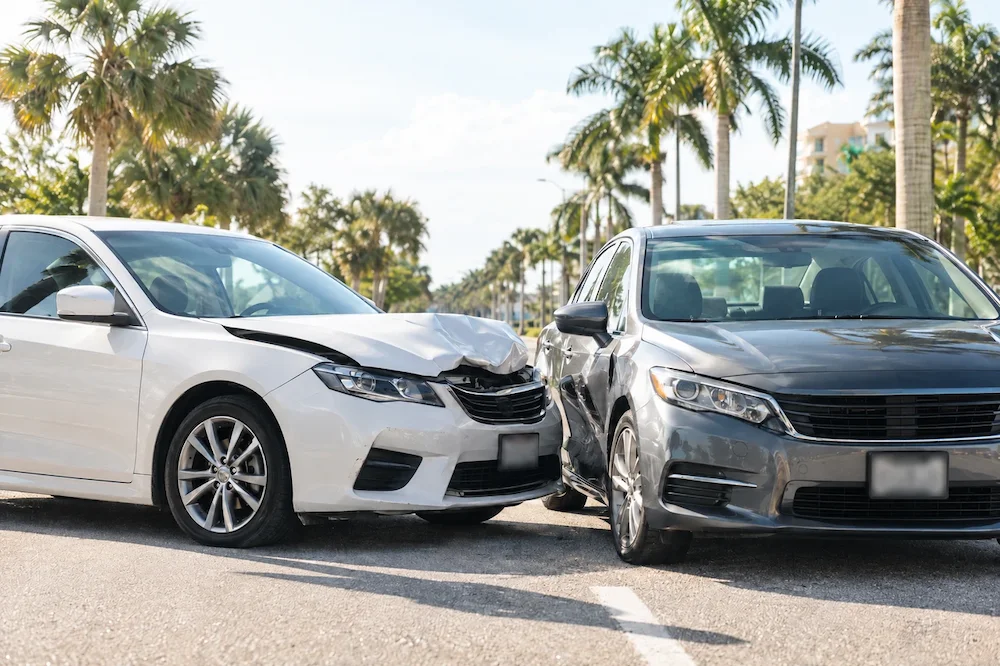



Does Florida’s No-Fault Law Affect My Accident?

When you're in a car accident in Florida, you may hear the insurance company or someone else call Florida a "no-fault state". If you're like most people, you probably don't know what that means or how it affects your accident.
Florida is a no-fault state, which means your own auto insurer, not the other driver's, is usually the first stop for your medical bills after a crash. That single rule shapes almost everything about your claim, from how fast you get paid to whether you can sue the other driver at all.
At Demand The Limits, our Boca Raton car accident lawyers walk clients through exactly what that first PIP claim covers and, just as important, where it stops.
How Florida's No-Fault Law Works
Florida Statute § 627.736 provides up to $10,000 in medical and disability benefits and, separately, $5,000 in death benefits.
If you’re injured in Boca Raton or anywhere in Florida, you will submit your claim to your auto insurer. PIP usually comes first from the injured person’s own policy or an applicable household policy. For an uninsured passenger or pedestrian, coverage may instead come from the PIP policy covering the vehicle involved. The exact priority depends on the person’s insurance status and relationship to the vehicle.
No-fault PIP insurance provides coverage for many expenses, including:
- Professional medical care
- Hospital stays
- Physical therapy
- Ambulance transportation
- Prescriptions
- X-Rays
- Prosthetic devices
- Lost wages
PIP doesn't cover 100% of your losses, and how much of the $10,000 is available for medical bills depends on one detail: whether a physician, dentist, physician assistant, or advanced practice registered nurse determines that the injured person had an emergency medical condition. With that diagnosis, Florida law allows up to the full $10,000 in combined medical and lost-wage benefits, paid at 80% of medical expenses and 60% of lost wages.
Without an emergency medical condition determination, medical benefits are generally limited to $2,500. PIP provides disability benefits for qualifying lost income separately, while medical and disability benefits remain subject to the policy’s overall $10,000 PIP limit.
Florida Isn't the Only No-Fault State
Florida is one of 12 states, plus Puerto Rico, with a no-fault auto insurance law. Other states use tort-based, add-on, or other insurance systems. That means an accident in a no-fault state like Florida is handled differently than one in the roughly 38 at-fault states: your own PIP pays first, no matter who caused the crash, rather than you filing directly against the other driver's liability insurer. Florida lawmakers have tried several times to scrap the system; the latest repeal bill (SB 522) died in committee in March 2026, so the $10,000 PIP requirement remains in effect for now.
When You Can Recover Beyond PIP
PIP covers a lot, but not everything. Medical care after a serious crash adds up fast, and it's common for a victim's bills to exceed what a $10,000 policy limit alone can cover.
Florida’s no-fault law limits tort liability to the extent PIP benefits are payable. If your losses exceed what PIP covers, you may still have a claim for uncompensated economic damages against an at-fault party. To recover non-economic damages such as pain and suffering, however, the injury generally must meet Florida’s serious-injury threshold under § 627.737(2).
To recover non-economic damages such as pain and suffering, the injury must generally involve at least one of the following:
- Wrongful death: A fatal crash lets surviving family pursue a wrongful death claim beyond PIP.
- Significant and permanent loss of an important bodily function: A documented, lasting loss of function, not a temporary limitation.
- Injury a doctor deems to be permanent: Medical evidence shows, within a reasonable degree of medical probability, that the injury won't fully heal.
- Significant and permanent scarring or disfigurement: Visible, lasting scarring can meet the threshold even without a loss of function.
Economic losses beyond available PIP benefits may include:
- Medical expenses
- Lost income
- Reduced earning capacity
- Replacement or household services
If the injury meets Florida’s serious-injury threshold, additional non-economic damages may include pain and suffering, mental anguish, and inconvenience.
#cta_start
Wondering If Your Claim Goes Beyond PIP?
If your medical bills are creeping past what your policy covers, or an insurer is already pushing back, it's worth getting a straight answer. Demand The Limits can review your claim and lay out your options.
#cta_end
What No-Fault Insurance Doesn't Cover
PIP solves one problem and creates a few others. Here's where the coverage stops and what fills the gap.
Property Damage
PIP is a personal injury benefit only, and doesn't pay to fix your car. Florida also requires $10,000 in property damage liability (PDL) coverage, which pays for damage the at-fault driver causes to your vehicle. You can also add collision coverage to your policy to cover repairs regardless of fault. Your PIP and PDL limits solve two different problems, medical bills and car repairs, and neither one covers the other.
Shared Fault
PIP benefits generally apply regardless of who caused the crash. Fault becomes relevant when you pursue damages from another responsible party. At that point, Florida's modified comparative fault law under Florida Statute § 768.81 reduces your recovery by your percentage of fault, and since a 2023 reform to that law, you can't recover from the other driver at all if you're found more than 50% at fault.
Filing Deadlines
A lawsuit against an at-fault driver still has a clock on it. Florida Statute § 95.11 provides that most negligence and wrongful death actions generally have a two-year limitations period. The date the clock begins can depend on the type of claim, so the deadline should be checked for the specific case.
Uninsured Drivers
PIP pays regardless of fault, but it won't make up for an at-fault driver who's underinsured or carries no insurance at all. Florida doesn't require most drivers to carry bodily injury liability coverage, so if the driver who hit you skipped it, UM/UIM coverage can provide another source of recovery when an at-fault driver has little or no bodily injury coverage, subject to the terms and limits of the policy.
What to Do After a Car Accident in Florida

The choices you make in the days right after a crash can shape your no-fault claim as much as the accident itself. A few things are worth doing without delay:
- Get qualifying medical care within 14 days. Florida’s PIP law generally requires that initial services and care be received within 14 days of the crash for medical benefits to apply.
- Report the crash to your insurer quickly. A delayed claim can slow down or complicate your payout.
- Keep everything. The police report, photos of the scene and your injuries, medical bills, and proof of any lost income all matter later.
- Watch how your injury heals. Permanent limitations, ongoing pain, or lasting scarring are signs your case may clear the serious injury threshold above.
When a Lawyer Makes the Biggest Difference
Some minor PIP-only claims may be handled without counsel. A legal review can be especially useful when coverage is disputed, losses exceed PIP limits, liability is contested, or permanent injury is involved.
- Medical bills start climbing past the $10,000 PIP limit.
- An insurer disputes whether your treatment was necessary.
- Your injuries are starting to look permanent enough to meet the serious injury threshold.
Florida's no-fault system is built to get injured drivers paid quickly, not to cover everything. It's easy to underestimate how fast a serious injury can outgrow a $10,000 policy limit, and just as easy to miss a 14-day or two-year deadline while you're focused on recovering.
Get Help From a Florida Car Accident Attorney
No-fault claims look simple until your medical bills outgrow your PIP limit or an adjuster starts picking apart your treatment. That's exactly where having someone in your corner pays off. Demand The Limits represents injured drivers, passengers, and pedestrians across Florida from our Boca Raton and Orlando offices.
Our team reviews PIP coverage, liability, medical documentation, damages, and all available insurance sources. Call (561) 600-3555 or contact us online for a free initial case review. The consultation is free, and there's no pressure, just a clear read on where you stand.

Co-founder and equity partner of Demand The Limits, PLLC
Alan Siegel focuses his practice in the area of personal injury including vehicular accidents, wrongful death, and slip and falls. No stranger to litigation, Alan has been an integral part of an award winning team helping earn such accolades as the prestigious Hat Trick Award for three consecutive “not guilty” trial verdicts.
Demand The Limits, Not Minimums!
Insurance companies are trained to minimize payouts. We are built to challenge that. Every case is prepared with the intention of pursuing the full policy limits available, never just the quickest resolution.