




Medical Malpractice Lawyer in Boca Raton, FL
Demand The Limits represents patients and families in Boca Raton and across Palm Beach County who have been harmed by medical negligence. Our medical malpractice attorneys know that framework and use it to hold providers accountable.


Skilled Representation for Medical Malpractice Victims in Boca Raton
%20(1).avif)
When you hire Demand The Limits for a medical malpractice claim, you work directly with the attorney assigned to your case. Our firm was built on a different philosophy from the start: the client, not the attorney's name on the door, is the center of everything we do.
Our attorneys include:
- Alan Siegel, recognized as a Super Lawyers Rising Star, National Trial Lawyers Top 40 Under 40 member, and Million Dollar Advocate Forum Life Member.
- Andrew Odza, who holds the same recognitions alongside an AVVO Client's Choice Award.
- Loreen Kreizinger, who carries a Martindale-Hubbell AV Preeminent rating, National Trial Lawyers Top 100 distinction, and recognition as American Institute of Trial Lawyers Litigator of the Year.
Together, the team has recovered over $120 million for injured clients across South Florida and holds more than 600 five-star Google reviews.



Types of Medical Malpractice Cases We Handle in Boca Raton
Medical negligence takes many forms, and the standard of care question is different in every specialty. Our Boca Raton medical malpractice attorneys handle claims across the full spectrum of healthcare settings.
Misdiagnosis and Delayed Diagnosis
A physician who fails to identify a condition or identifies it far later than a competent provider would have can eliminate treatment options and dramatically worsen outcomes.
Cancer, strokes, pulmonary embolisms, and serious infections are among the conditions where a missed or delayed diagnosis causes irreversible harm. These cases require showing what a competent physician in the same specialty would have caught, and when.
Surgical Errors
Wrong-site surgery, damage to surrounding organs or tissue, objects left inside the body, anesthesia failures, and inadequate postoperative management all fall within the range of surgical malpractice.
Not every surgical complication is negligence, but many complications that providers attribute to "known risks" are departures from accepted techniques that caused preventable harm.
Medication Errors
Wrong drug, wrong dose, or dangerous interactions: these errors can occur at the prescribing level, the pharmacy level, or through hospital medication management failures. The harm ranges from serious adverse reactions to death.
Emergency Room Negligence
Emergency departments are high-pressure environments where diagnostic errors, delayed treatment, and failures to recognize time-sensitive conditions like heart attacks, strokes, sepsis, and appendicitis occur with significant frequency. ER malpractice cases involve specific questions about triage standards and the duty of care owed to patients in emergency settings.
Anesthesia Errors
Failures in preoperative assessment, improper dosing, inadequate monitoring during a procedure, and delayed recognition of anesthetic complications can cause brain injury, cardiac events, or death. These cases require specialized expert review of anesthesiology standards.
Failure to Treat or Monitor
When a provider correctly identifies a condition but fails to treat it appropriately or discharges a patient without adequate follow-up, and the patient suffers harm as a result, that failure can constitute malpractice independent of the original diagnosis.
Cancer Misdiagnosis
A missed or delayed cancer diagnosis is among the most consequential forms of medical negligence. When a provider fails to order appropriate testing, misreads imaging or pathology results, or dismisses symptoms that warranted investigation, the patient may lose treatment options that would have been available at an earlier stage.
Hospital Negligence
Hospitals can be directly liable for the negligence of their employed staff, failures in infection control, inadequate credentialing of physicians, and systemic failures in patient safety protocols. In some cases, the institution's own policies and procedures are the source of harm, not just a single provider's decision.
Nursing Home Negligence
Medication errors, pressure ulcer development, falls resulting from inadequate supervision, dehydration, malnutrition, and failure to respond to a resident's deteriorating condition are all forms of long-term care negligence that can rise to the level of malpractice.
Wrong drug, wrong dose, or dangerous interactions: these errors can occur at the prescribing level, the pharmacy level, or through hospital medication management failures. The harm ranges from serious adverse reactions to death.



%20(1).avif)
A Bad Outcome Is Not Always Malpractice
But some are. We find out which. Our Boca Raton medical malpractice attorneys review medical records and consult with qualified experts to determine whether the care you received fell below the accepted standard and whether that failure caused your injury. Reach out to us today.

How to Prove Medical Malpractice in Florida
Medical malpractice is not proven by showing that something went wrong. It requires establishing four specific elements, all supported by qualified expert testimony.
Duty of Care
The provider owed you a professional duty of care. This exists whenever a doctor-patient relationship is established through an appointment, treatment, or any accepted professional relationship with the patient.
Breach of the Standard of Care
The provider departed from what a reasonably competent provider in the same specialty would have done under the same circumstances. Under Florida Statute §766.102, this standard is defined by what is recognized in the medical community as acceptable under similar conditions. Establishing a departure requires expert testimony from a provider who actively practices in the same or a similar field.
Causation
The breach must have directly caused the harm you suffered. This is often the most contested element, as providers argue that the patient's underlying condition, not the provider's conduct, caused the outcome. We address causation through expert analysis that links the specific departure to the specific injury.
Damages
The harm must have produced measurable losses: physical, financial, or both. Without damages, there is no viable claim, regardless of how clearly the standard of care was violated.
Who Can Be Held Accountable for Medical Negligence?
Medical malpractice liability can extend to any healthcare provider whose negligence caused patient harm. Our medical malpractice law firm in Boca Raton evaluates all potential defendants before the pre-suit process is triggered.
- Physicians, surgeons, and specialists of all types
- Nurses, nurse practitioners, and physician assistants
- Anesthesiologists and CRNAs
- Hospitals and health systems, for employed staff and institutional failures
- Surgical centers and outpatient facilities
- Emergency medicine providers
- Radiologists and pathologists
- Pharmacists and pharmacies
- Obstetricians, midwives, and labor and delivery staff
- Nursing homes and long-term care facilities
Identifying every party with potential liability at the outset is critical. Once the statute of limitations has run, adding defendants becomes legally difficult or impossible.
Compensation Available in a Medical Malpractice Case in Boca Raton
The damages available in a medical malpractice claim depend on the severity of the harm, how it affects the patient's life and ability to work, and what future treatment will cost. Cases for economic and non-economic damages are important to build correctly.
Economic Damages
Economic damages cover the financial consequences of the negligence:
- Past and future medical expenses, including additional treatment made necessary by the malpractice
- Lost wages and income during recovery
- Reduced earning capacity for long-term or permanent injuries
- Home care, rehabilitation, and assistive equipment
- Out-of-pocket expenses directly caused by the harm
Non-Economic Damages
Non-economic damages address the personal impact:
- Pain and suffering, past and ongoing
- Emotional distress and psychological harm
- Loss of enjoyment of life
- Permanent disability or disfigurement
- Loss of companionship or consortium
Florida's Supreme Court struck down caps on non-economic damages in most medical malpractice cases, finding them unconstitutional. There is no arbitrary ceiling on what a jury can award for pain and suffering in these cases, though limitations still apply in wrongful death claims involving adult children under Florida Statute §768.21(8).
Punitive Damages
Punitive damages may be available in cases involving intentional misconduct, falsification of records, or gross negligence. These actions constitute conduct that goes well beyond a single error in judgment.
Florida Medical Malpractice Law: What Patients and Families Need to Know
Medical malpractice claims in Florida involve procedural requirements, expert affidavit obligations, and deadlines that are more demanding than any other type of personal injury case. Understanding them from the start is essential.
The Standard of Care
Under Florida Statute §766.102, a healthcare provider is held to the standard of care recognized as acceptable under similar conditions and circumstances. Establishing a departure requires expert testimony from a provider who actively practices or teaches in the same or a similar specialty.
Mandatory Pre-Suit Process
Before any lawsuit can be filed, the claimant must complete a mandatory pre-suit investigation under Florida Statute §766.106:
- Conduct an investigation and obtain a corroborating expert affidavit confirming reasonable grounds to believe negligence occurred and caused harm
- Serve a Notice of Intent to Initiate Litigation on each prospective defendant, along with the expert affidavit and all relevant medical records
- Wait a minimum of 90 days for the defendant's pre-suit investigation
After the 90-day period, the defendant must respond by rejecting the claim, making a settlement offer, or admitting liability and proposing arbitration on damages. Errors in the pre-suit process can result in dismissal. The presuit period also tolls the statute of limitations while it is running.
Statute of Limitations
Under Florida Statute §95.11, medical malpractice claims must be filed within two years of when the negligence occurred or was discovered, with a four-year statute of repose that applies regardless of discovery in most cases.
Exceptions exist for fraud, concealment, and minor patients. Because the pre-suit process itself takes at least 90 days, the practical working timeline is significantly shorter than two years.
The Records Have the Answers. We Know How to Interpret Them.
Our medical malpractice attorneys obtain the complete clinical file, have it reviewed by qualified experts in the relevant specialty, and identify exactly where the standard of care broke down. Call today for a free case evaluation.
What Our Clients Say About Us



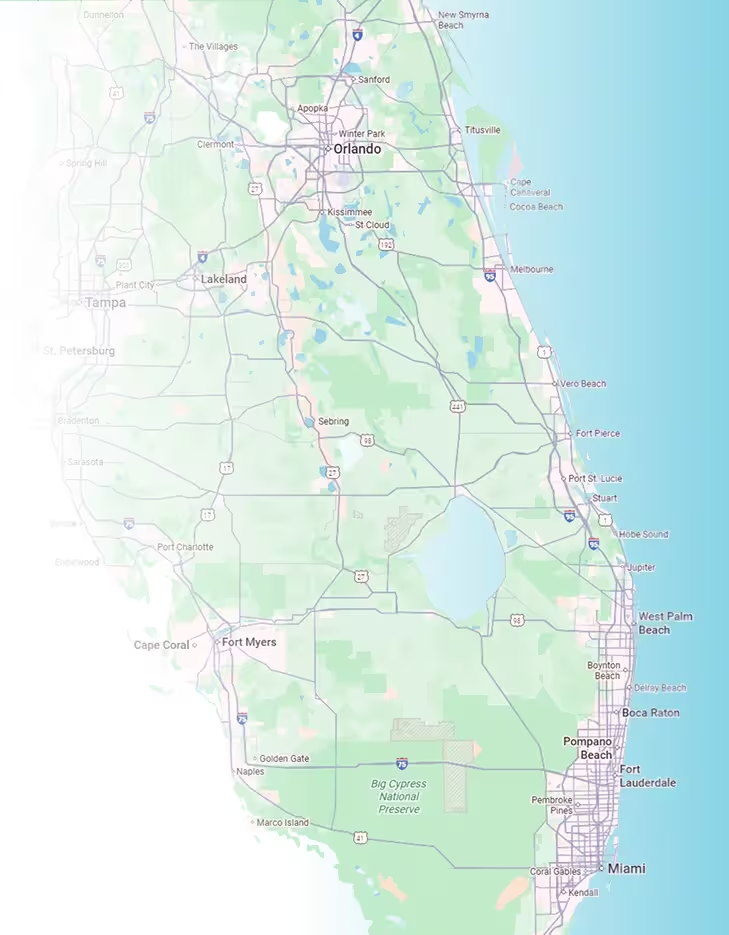
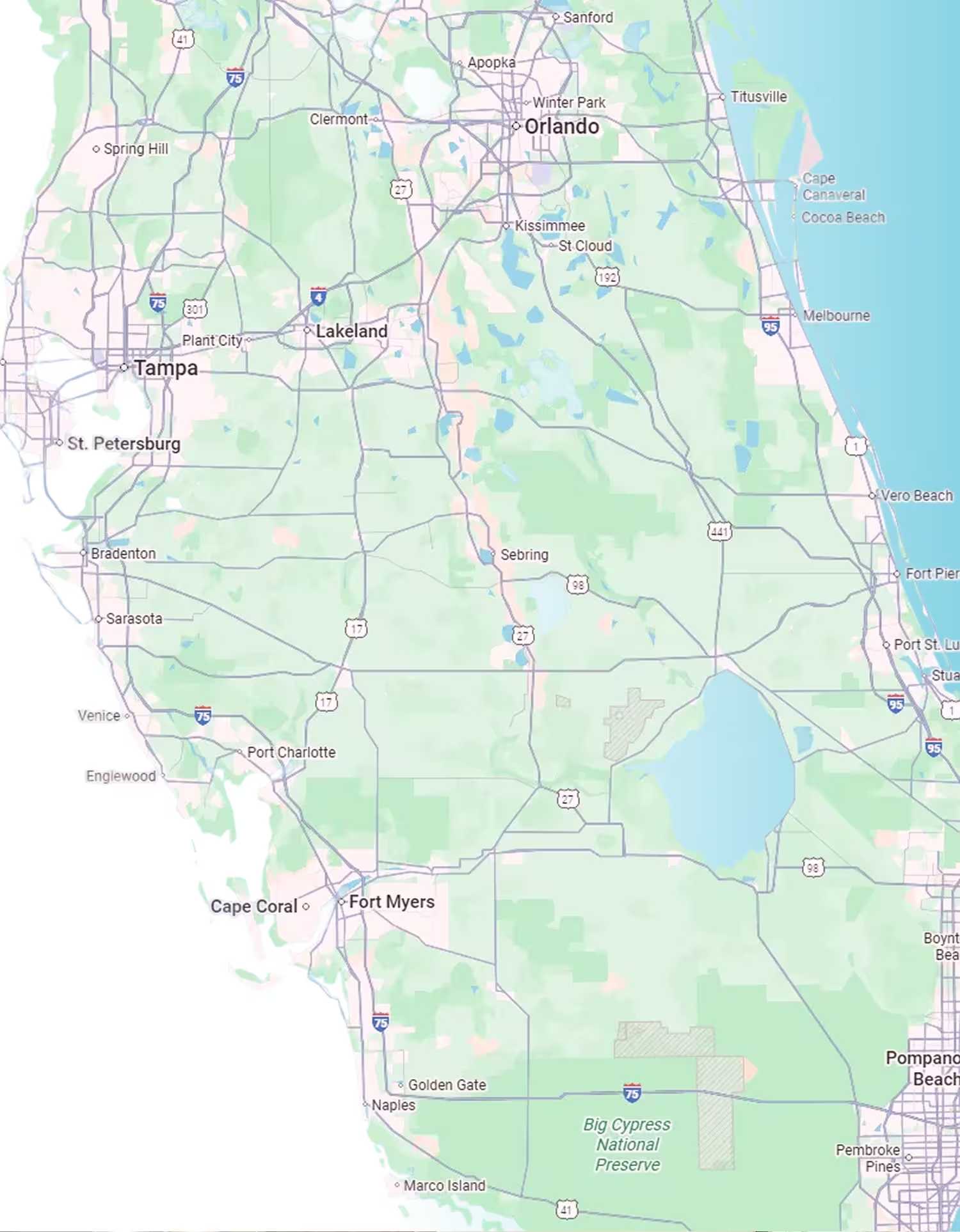
Our Medical Malpractice Lawyers Serve All of South Florida
Our medical malpractice attorneys in Boca Raton represent patients and families throughout the region. If you were harmed at a hospital, surgical center, clinic, or physician's office anywhere in South Florida, we are available to review your case.
.svg) Pompano Beach
Pompano Beach- Deerfield Beach
- Fort Lauderdale
- Jacksonville
- Tallahassee
- Fort Myers
- And throughout the entire state.

.svg)
.avif)
Speak with a Boca Raton Medical Malpractice Attorney
Our attorneys are available around the clock to review what happened, answer your questions directly, and give you an honest assessment of your options. There are no upfront costs and no fees of any kind unless we recover for you.
Frequently Asked Questions About Medical Malpractice Claims
How do I know whether what happened was malpractice or just a bad outcome?
Medicine involves uncertainty, and not every poor outcome is negligence. Malpractice requires a departure from the accepted standard of care that caused your specific injury. A qualified medical expert review of your records is the only reliable way to make that determination, and it is where every case we evaluate starts.
Can I sue a hospital directly for negligence, not just the doctor?
Yes. Hospitals can be liable for the negligence of their employed staff, for institutional safety failures, and for inadequate credentialing of physicians whom the hospital grants privileges to. Whether and on what theory a hospital is directly liable depends on the specific facts of your case.
Does a signed informed consent form prevent me from filing a malpractice claim?
No. Informed consent documents that you were told about the known risks of a procedure. They do not authorize negligence or permit a provider to depart from the standard of care. Consent forms are raised as a defense in malpractice cases, but they rarely bar a legitimate claim entirely.